

What Diabetes Teaches Us About Tuberculosis
Diabetes and tuberculosis (TB) are two diseases associated with two very different spheres: the former with wealthier nations where diets are more likely to be high in fats and sugar; the latter with poverty and poor living conditions. Nevertheless, these two diseases exist in tandem with one another: diabetes actually increases the chance of developing tuberculosis. Diabetes, a chronic disease, weakens the immune system, and thus diabetics have a 2–3 times higher risk of tuberculosis than the average person. Furthermore, TB patients with diabetes have a worse prognosis than others, having a higher risk of death and relapse of TB after treatment.
While many countries actively combat tuberculosis, most do not have the resources to fight diabetes. TB is considered a worldwide epidemic; one in three people globally are infected with latent TB. Screening for TB is free and treatment can be provided efficiently. However, diabetes screening and medication is usually paid for by the individual. Since TB is most prevalent among middle- and low-income countries, the relationship between these two diseases is especially concerning.
But developing countries are not the only ones touched by these two diseases. Just one year ago, several antibiotic-resistant strains of TB were discovered. Coupled with the fact that more than 29 million people that have diabetes in the United States, it is possible that TB will make a comeback in the United States. So how can it be stopped?
There is evidence that diabetes medication can also function as tuberculosis treatment. Previous research has demonstrated that certain diabetes treatments affect the normal antibiotics used to treat TB. Now, a drug that had been used to treat diabetes in the past has been proven to be effective in treating TB.
MET: Treating TB with an Anti-Diabetic Drug
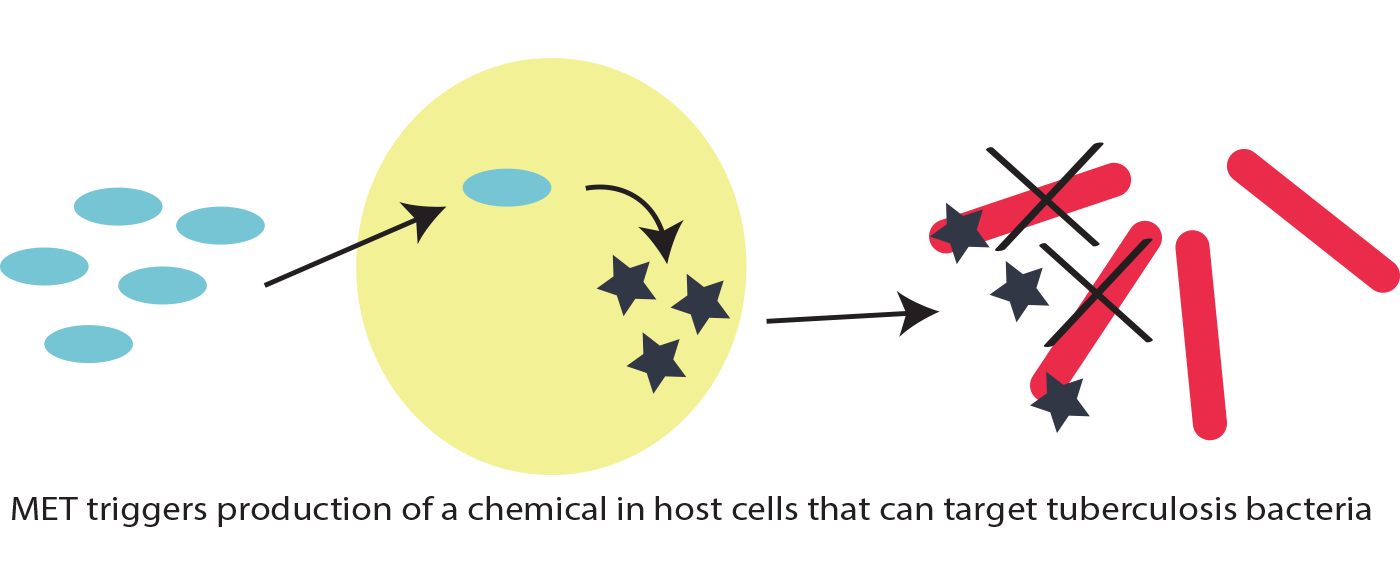
Metformin (MET) was originally implemented as an anti-diabetic drug as it suppresses glucose production. Recently though, MET has been found to trigger production of a chemical in host cells that can target bacteria; mycobacterium tuberculosis, or Mtb (the bacterium that causes TB), is no exception. MET enhances the immune system, instigating an indirect attack on TB. When used in combination with other TB medications, MET has also been found to improve their efficiency.
As more and more antibiotic resistant strains of diseases are discovered, MET presents a new approach not only in combating TB, but also other bacterial diseases. Since MET works via an indirect pathway, bacteria are less likely to develop resistance. Moreover, it is affordable and already in widespread use; MET is believed to be the most widely used antidiabetic drug in the world.
MET illustrates that the new therapies of tomorrow may be created from the medications of the past. So maybe you can teach an old dog new tricks; or, perhaps it would be more appropriate to say, we just haven’t discovered all the tricks an old dog knows.
References
“Drug for Treating Diabetes Could Be Adjunct Treatment for Tuberculosis.” Infection Control Today. Infection Control Today, Dec. 2014. Web. 5 Jan. 2015. <http://www.infectioncontroltoday.com/News/2014/12/Drug-for-Treating-Diabetes-Could-be-Adjunct-Treatment-for-Tuberculosis.aspx>.
Knox, Richard. “Unlikely Marriage Of Diseases: TB And Diabetes Form A ‘Co-Epidemic'” NPR. NPR, 30 Oct. 2014. Web. 05 Jan. 2015. <http://www.npr.org/blogs/goatsandsoda/2014/10/30/360125323/unlikely-marriage-of-diseases-tb-and-diabetes-form-a-co-epidemic>.
World Health Organization. “Tuberculosis & Diabetes.” Sept. 2011. Web. 05 Jan. 2015. <http://www.who.int/tb/publications/diabetes_tb.pdf>.