

Exercise: a simple word commonly associated with fitness and health. Whether it is First Lady Michelle Obama promoting a nationwide movement to exercise and eat healthy or individuals setting aside a part of their day to hit the gym, exercise is a common topic in both thought and conversation. There are countless benefits associated with exercise, such as a healthy weight, better cognitive function during aging, decreased chances of heart disease and more. While you may have heard of many of these, a lesser-known advantage of exercise is protection against cancer. Yes, cancer: the disease that seems to be linked to anything and everything these days. The Harvard School of Public Health lists protection from certain cancers, specifically colon, breast and possibly lung and endometrial (uterine lining) cancer as a benefit of exercise on their website, and recent studies have tested this theory.
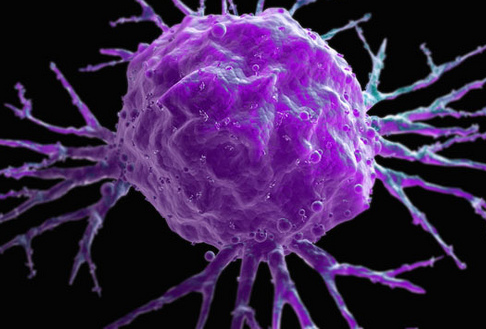
Cancer Cell
As cancer tumors grow, cells release biochemical signals to induce the growth of extra blood vessels that can supply the tumor with extra oxygen. If the growth of these blood vessels becomes excessive, however, the network of tubes can end up depriving the tumor of oxygen, a condition known as hypoxia. Hypoxic tumors are especially unwanted because the hypoxic environment decreases the efficacy of chemotherapy drugs and radiation.
In a study conducted with mice, scientists implanted mouse breast cancer cells into female mice. Post-surgery, some mice remained sedentary while others exercised by running on wheels. While both groups of mice developed tumors, the tumors developed at a much slower rate in the group of mice who ran, and the blood vessels of the tumors in these exercising mice were healthier.
The scientists used additional mice with breast cancer that were split up into four groups: one group remained sedentary, one group received chemotherapy and remained sedentary, one group ran on wheels and a final group received chemotherapy and ran on wheels. While the mice that only received chemotherapy and only ran had smaller tumors than the sedentary mice, the mice that both ran and received chemotherapy had significantly smaller tumors than all other groups. This result suggests that exercise may be making the tumors less hypoxic and therefore more amenable to treatment. Additionally, in the group of mice who only ran, scientists found a large amount of tumor cell death, though the reason for this is unknown.
Because this study was conducted in mice, it is unclear as to whether or not exercise can have a similar effect on cancer in humans. Although further research is needed to better understand these results and determine how they can be applied to cancer treatment at large, the results are promising nonetheless.
Sources
http://www.hsph.harvard.edu/nutritionsource/staying-active-full-story/
http://well.blogs.nytimes.com/2015/03/25/how-exercise-may-aid-cancer-treatment/?ref=health