
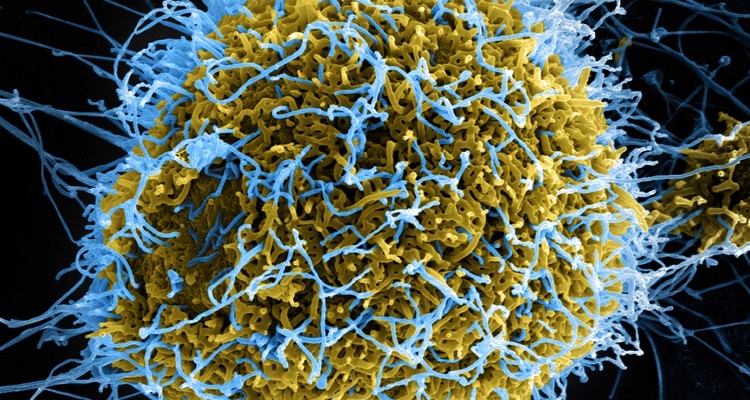
A Revolution in Viral Screening
Ebola, SARS, HIV, H1N1.
Sound familiar? They should. These are the four viruses that triggered some of the most deadly epidemics in the past decade, spreading across the world and destroying lives. In recent years, viruses have become an increasingly dire problem among public health officials. It seems that every few years we’re discovering either a completely new strain of virus, or a mutated version of an existing virus that can wreak havoc on the human population.
“Viruses are already taking advantage of sprawling urban centers to become stealthier, deadlier, and easier to transmit”
The reason viruses are such a headache for the medical community is because once you come down with one, your options become extremely limited. While the advent of antibiotics has curbed the severity of bacterial infections, viruses still run amok. Vaccines can’t treat them—they can only prevent them—and antiviral drugs such as Tamiflu, while stockpiled by governments worldwide, are shockingly ineffective.
Enlarge

While we’re still a ways from the walking dead, there’s no doubt that viruses are becoming an ever greater threat to humanity. The exploding human population is providing them with far more opportunities to mutate and evolve. Viruses are already taking advantage of sprawling urban centers to become stealthier, deadlier, and easier to transmit. In fact, according to experts at the World Health Organization (WHO), H5N1, a form of bird influenza that has over a 50% mortality rate in humans, is only a few mutations away from achieving human-to-human transmissibility. And unless we start finding ways to protect ourselves, World War Z could be right on our doorstep.
Okay maybe not, but it would still be really bad.
So how do we avert this catastrophic future? Well a good start is to know the enemy. Since we can’t treat viruses, being able to accurately test for them in infected patients allows us to proactively monitor outbreaks that could threaten the general public. All organisms, viruses included, exist based on the genetic information in their genomes. So the best way to identify whether you’re just coming down with the common cold or you’re patient zero for the latest Ebola outbreak is to sequence the genome of the virus currently setting up shop in your body.
Scientists have come up with a number of ways to do this. The current standard is a method that uses Polymerase-Chain Reaction (PCR), which has proven to be extremely sensitive, but is expensive and even the most comprehensive tests can only screen for at most 20 viral strains at a time.
A newer, and far more promising technique lies in a method called Metagenomic Shotgun Sequencing (MSS). MSS breaks up the viral genome into tiny pieces, sequences each piece, and then reconstructs a consensus sequence. Doctors love it because it is not only cheaper than PCR, but also requires no prior knowledge of the virus in the sample. In other words, doctors don’t need to know what they are looking for to use MSS.
Enlarge

Then what’s the problem? Although MSS sounds great in theory, in reality it isn’t nearly as sensitive or as accurate as PCR. The issue is that samples subjected to MSS are overwhelmingly filled with other genetic material, from human cells and bacteria—the viral DNA only makes up a tiny fraction of the sample. The test isn’t sensitive enough to pick up on this genetic material, and the stuff that it does pick up is usually too fragmented to be clearly identified.
That’s what makes a new medical tool called “ViroCap”, developed by researchers at Washington University in St. Louis, so promising for healthcare professionals worldwide. In a recent study published in Genome Research, ViroCap is reportedly able to detect any known virus circulating in a person’s blood. Not only this, but it claims to be able to do so with 50% more precision, and far less cost, than the conventional PCR testing used today.
So how does it do this? The magic of ViroCap lies in a process called targeted sequence capture that amplifies the viral DNA/RNA within a sample so it can be detected and properly sequenced by MSS. To develop targeted sequence capture, researchers painstakingly condensed 1 billion base pairs of viral genetic material, taken from every known virus in the world, into a set of representative sequences. They then used this material as a probe to tag viruses that contain this representative genetic material. The result is a viral sample that can effectively and accurately be sequenced by MSS, with little to no loss of precision. Think of it as MSS on steroids.
“ViroCap is reportedly able to detect any known virus circulating in a person’s blood.”
Indeed, when researchers compared the accuracy of standard MSS and ViroCap-enhanced MSS, the differences were shocking. They used both methods on a sample of 32 kids, all infected with various viral diseases. Whereas standard MSS only detected 21 viruses, ViroCap-enhanced MSS detected all 32, an increase of 52 percent. This makes ViroCap just as sensitive as standard PCR-based sequencing, while also increasing affordability and allowing for detection of any known virus at once.
Of course, it’ll be years before you’ll be able to get a ViroCap test at your family physician; the researchers need to expand into clinical trials and fine-tune their detection methods. But in a world where viruses pose a greater threat than ever, the potential of ViroCap is undeniable.